Germany arrests 25 accused of plotting coup
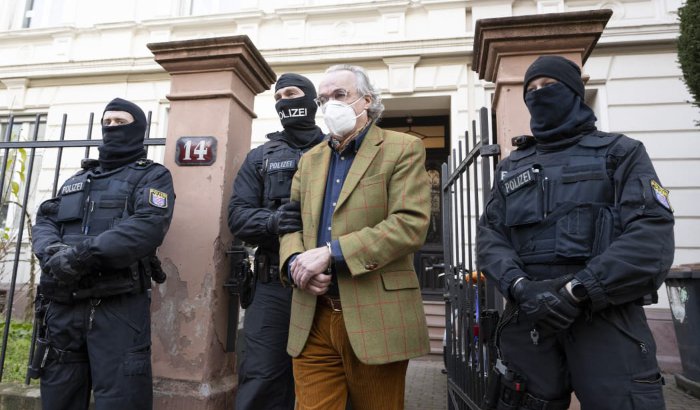
Among those detained were a German prince, a former far-right member of Parliament, an active soldier and former members of the police and elite special forces.
The plan was to storm the German Capitol, arrest lawmakers and execute the chancellor. A prince descended from German nobility would take over as the new head of state, and a former far-right member of Parliament would be put in charge of a national purge.
To facilitate the coup, the electricity network would be sabotaged. Satellite phones to communicate off grid had already been bought.
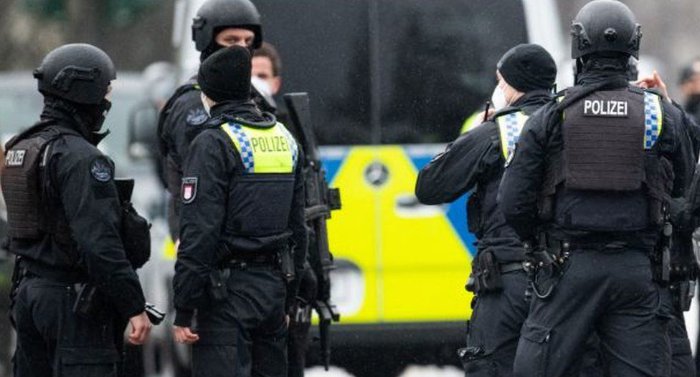
That is what German prosecutors and intelligence officials say a nationwide far-right terrorist network was plotting before 3,000 police officers and Special Forces fanned out across the country on Wednesday to raid 150 homes and arrest 25 suspected co-conspirators. They included an active duty soldier, a former officer in the elite special forces, a police officer and at least two army reservists.
Among the items uncovered was a list containing 18 names of politicians considered enemies, possibly to be deported and executed, among them Chancellor Olaf Scholz, people familiar with the raids told The New York Times, requesting anonymity because they were not authorized to discuss the investigation.
“This is not the first case of a cell like this planning for Day X,” said Konstantin von Notz, a lawmaker and member of the intelligence oversight committee in the German parliament. “The number of these cases are piling up and the question is to what extent are they connected.”
It is not clear how capable the plotters would have been at executing such an attack, nor how close they were to attempting to implement their plan: According to some intelligence officials, the group had twice missed dates when they had aimed to trigger their attack. But many of those arrested were known to be heavily armed, prosecutors said, describing the plot as possibly the most brazen in Germany’s postwar history — one aimed directly at the heart of the state.
“This represents an escalation. They had plans to march into Berlin and take out part of the federal government,” said Stephan Kramer, head of domestic intelligence of the state of Thuringia, where several of the raids took place.
“In their plan to overthrow the government, they were willing to accept deaths.”
Beyond the immediate threat, the scale of the raids and the ambition of the plot prosecutors outlined pointed to persistent vulnerabilities to extremism in Germany’s core institutions — its Parliament, its judiciary, its local and state police, and even its most elite military forces — which the German authorities have struggled to root out in recent years.
Two people arrested were detained outside Germany, one in Austria and another in Italy.
One conviction shared by its members was that “Germany is currently ruled by members of a so-called deep state” that needed to be overthrown, a statement from prosecutors said.
Prosecutors said that to carry out its plans the group had formed a military wing, which was actively trying to recruit in police and military, and a political wing, which it called the council, a sort of shadow government it intended to install in Berlin.
“The military arm would build a new German Army, consisting of ‘homeland security companies’ yet to be established,” the federal prosecutor, Peter Frank, said on Wednesday. Members of the military faction had also been active in the federal armed forces, he said.
The attackers, prosecutors said, seemed willing to use violence. “Members of the organization were aware that this goal can only be achieved through the use of military means and violence against state representatives,” the prosecutor’s statement added. “This also included commissioning killings.”
It was not the first plot against government officials that law enforcement agencies have foiled this year.