Table of Contents
You know what they told me? That, in Eritrea, corruption is 0%.
Africa’s ‘optimist-in-chief’ on the continent’s renaissance: ‘Don’t just believe me, believe the data’
In an exclusive interview, Akinwumi Adesina, head of the African Development Bank, says the outlook is good for a continent with the workers of the future and the best investment opportunities.
Fri 13 Oct 2023 15.55
Africa holds the future workforce for the ageing economies of the west, according to one of the continents leading financial figures, who also said it was time to ditch the myths around corruption and risk.
In an exclusive interview before this weekends World Bank meetings in Morocco, Akinwumi Adesina said there was a resurgence of belief in Africas economic prospects and attacked negative stereotyping, adding that there was every reason to be optimistic.
Now midway through his second five-year term as president of the African Development Bank (AfDB), the Nigerian former agriculture minister said the continents demographic advantage, expanding middle class, and vast investment opportunities meant a shift was under way.
The global financial crisis that brought the world down in 2008 - that was not in Africa. We have no Wall Street
And not before time - were tired of being at the bottom of the value chain, Adesina said. The fastest way to poverty is through exporting raw materials, but the highway to wealth is through global value chains by adding value to everything you have, from oil to gas to minerals to metals and food. We must add value.
The issue is we have to invest right; we have to make sure the governance environment is right; we have to make sure the incentives are right. Africa must take a position that it is no longer going to be at the bottom but at the top.
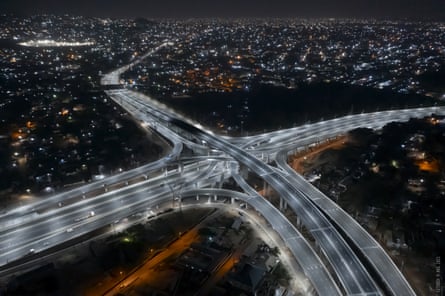
Established in 1964, the AfDB is Africas only AAA-rated financial institution, focused on what Adesina said were his high fives: enabling universal access to electricity, improving quality of life, industrialising, food self-sufficiency, and integrating the continents 54 countries to create larger and more efficient markets.
I dont think that you can have development with pride unless you can feed yourself, he said.
He said the record-breaking amounts attracted from international investors in the past few years pointed to a renewed trust in the banks ability to fast-track development across Africa, particularly in the 37 low-income countries.
The 81 shareholders of the bank provided us with an increase in the banks capital at the end of 2019, from $93bn to $208bn [£76bn to £171bn] - the highest capital increase in the banks history. That was timely because little could we have imagined that we were going to move into the world of Covid.
So that increase allowed us very quickly to do an emergency support facility of $10bn in Covid crisis response for Africa and to immediately respond when the global food crisis was coming from the Russias war in Ukraine. We launched a $1.5bn emergency food-production facility to mitigate that global geopolitical crisis leading to a food crisis in Africa.
Im an eternal optimist … Look at the numbers: Africas population is going to be 1.72bn by 2030. Thats larger than China, larger than India
But he does want the international financial systems to be structured fairer, so that African nations have as equal access as the developed nations to reserves and liquidity. Adesina will be taking his call for equity to this weekends World Bank summit.
What is very important for us is the issue of the special drawing rights. Africa needs to have a lot more resources for financing climate, but what is actually out there its not enough. We have on the table right now the special drawing rights of the IMF. But when they were issued, US$650 billion were issued, Africa got US$33 billion. Its 4.5%, its not good. You have small countries in Europe that got more and that is not fair and not inclusive. With 190 member states in the IMF, Africas 54 countries should have been closer to receiving 25% of the special drawing rights.
African heads of state are asking for US$100 billion to be re channelled from the countries that got it and dont use it, or need it, Adesina said, and he believes this could be key to real progress.
We might think of maybe just adjusting it a little bit. And calling it supporting development revitalisation. Thats also SDRs.
Corruption, he said, is actually less in Africa than other parts of the world. The global financial crisis that brought the world down in 2008 - that was not in Africa, he said. We have no Wall Street.
That collapse came from greed, from corruption, from fraud.
You have people cooking the books that are in the financial industry in Europe, not in Africa. Corruption is not an African issue.
The issue is, thats not to say that theres none. What you have to do is to continue to improve transparency, accountability and the use of public resources.
I just came back from Eritrea. I hear a lot of things about Eritrea but my first time there and I was talking to UN Development Programme staff. You know what they told me? That, in Eritrea, corruption is 0%. Why do we not talk about that? Thats the kind of thing that we want to do. For us as a development bank, we take good governance very, very seriously.
As far as I am concerned, peoples resources do not belong in other peoples pockets. Governments must be accountable to their people. There has to be transparency in how the resources are acquired and used. Thats why we have a governance programme. When you get money from us, we also support you technically. You are accounting for those resources.
I dont want to minimize that Africa has a significant amount of illicit capital flows; it does - anything between $80bn and $100bn a year. But guess what? Those that are doing that are the multinational companies. And so what we have got to do is bring a searchlight to that.
Read More: theguardian.com/global-development/2023/